Author: Michael Burry
Compiled by: Shenchao TechFlow
Shenchao Introduction: After the Wall Street Journal front page revealed that Jensen Huang is suspected of building a covert computing power channel through Southeast Asian data centers to bypass export controls, Michael Burry, the real-life inspiration for "The Big Short," personally stepped in to review Nvidia's SEC-disclosed financial reports and dig deep into the statistical loopholes behind its Asian revenue.
Burry sharply pointed out that in the third quarter of fiscal year 2026, Nvidia quietly changed its revenue accounting standard from "billing settlement location" to the vague "headquarters location," thereby making the once rapidly growing Singapore offshore revenue vanish into thin air. This sudden change in financial reporting standards provides the market with a new forensic perspective for examining its regulatory risks.
The Wall Street Journal Fires the First Shot, and the Media Finally Begins to Fulfill Its Oversight Duty
Early this morning, the Wall Street Journal published a blockbuster investigative report titled "How Jensen Huang Laid a Covert Channel to Keep Beijing Running in the AI Arms Race."
The report's subtitle further stated: "Giant data centers in Southeast Asia exploit regulatory loopholes in U.S. sanctions, providing crucial computing power support to Chinese companies while also providing cover for suspected chip smuggling activities."
Mainstream financial media have finally begun to fulfill their investigative duty on the Nvidia issue. I have to say, it is truly sad that the entire market had to wait until a sensational scandal broke before finally waking up from blind frenzy.
For a long time in the past, almost only I and a few others were fighting alone, trying to puncture the bubble and myth surrounding Nvidia. Now, I hope the mainstream media has been thoroughly awakened and will fully fulfill the professional duty of journalists from now on, conducting comprehensive and rigorous investigation of the facts.
As for tracking this dimension, I will gradually reduce my public efforts going forward. I currently still hold put options on Nvidia stock, and if there are any position adjustments in the future, I will naturally keep everyone updated in a timely manner.
However, Nvidia is still worth the occasional short thoughts from me, and this morning I happened to sort out one key detail.
The Vanishing Singapore: From a Revenue Giant Accounting for 22% to Vanishing Into Thin Air
Many friends who have long tracked Nvidia's financial dynamics should remember: in earlier years, Nvidia's revenue share from the Chinese market remained consistently high. But in the years just before strict export controls on China were fully implemented, even counting the relatively loose early export rules at the time, its disclosed China revenue share suddenly suffered a cliff-like plunge.
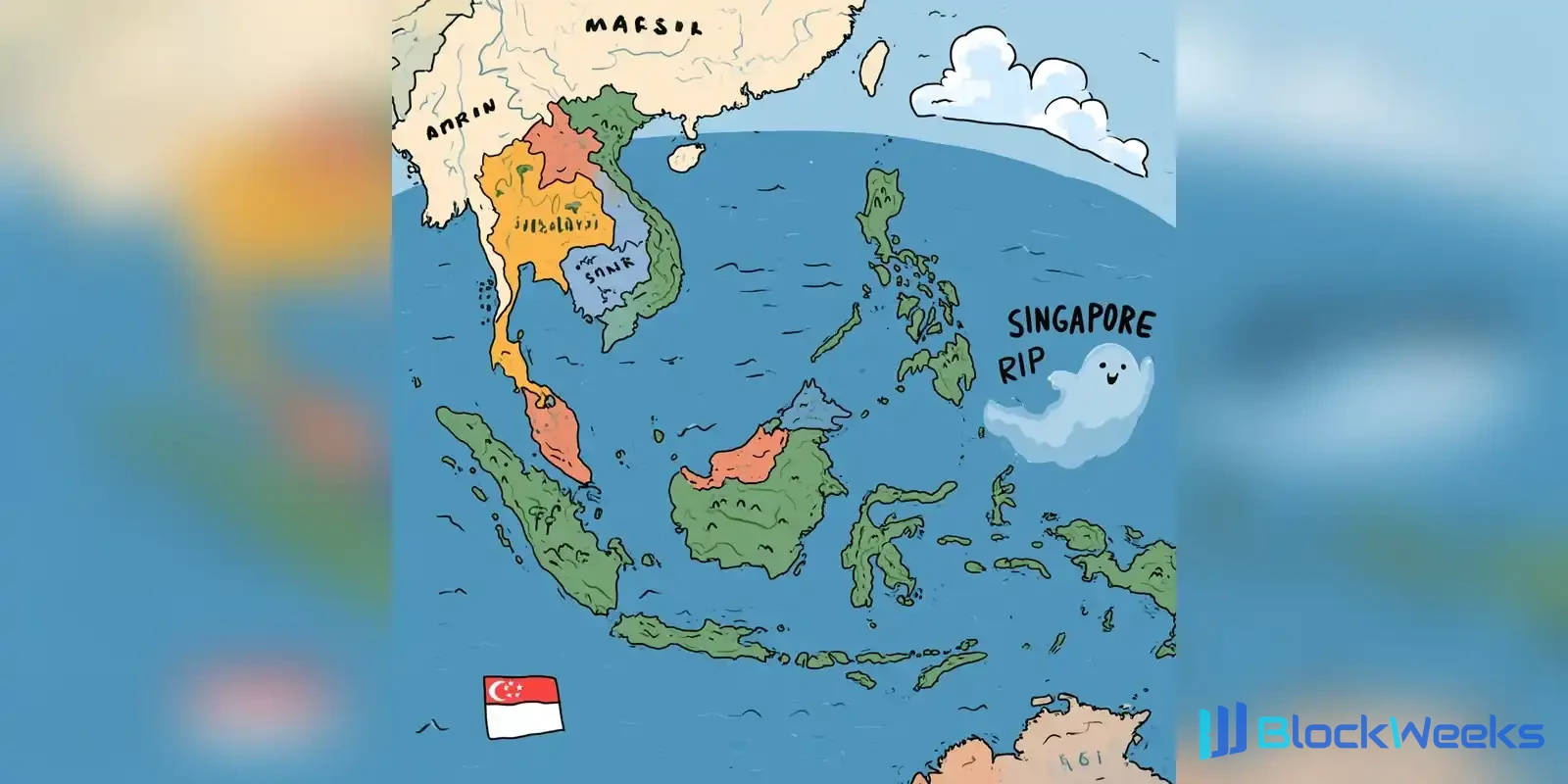
In sharp contrast, very few people noticed another extremely abnormal phenomenon at the time: Nvidia's revenue share in Singapore was exploding at an astonishing rate, until it later suddenly vanished into thin air.
Take the quarterly financial report for the period ended July 27, 2025, as an example: Singapore contributed as much as $10.16 billion in revenue to Nvidia in a single quarter, accounting for as much as 22% of its total network-wide revenue at one point.
Nvidia previously explained in its financial report risk disclosures that customers chose Singapore purely to centralize billing and settlement operations, while the products would actually ultimately be shipped to and installed in other countries and regions. The data disclosed at the time even showed that more than 99% of the data center computing power revenue billed to Singapore ultimately originated from orders from U.S. domestic customers.
The Magic of Statistical Standards: Switching From Billing Location to Headquarters Location
Armed with these enormous contrasts, I carefully reviewed Nvidia's financial report audit notes. The facts proved that, as chip sales to the Chinese market became increasingly sensitive and controversial, Nvidia quietly changed its financial statistical standards.
The most critical turning point occurred at the end of 2025 (that is, Nvidia's third quarter of fiscal year 2026). Without any major public announcement, Nvidia officially and quietly adjusted the baseline for geographic revenue statistics.
They completely switched from the long-used "Billing or Invoicing Location" to the customer's "Headquarters Location."
From the perspectives of financial accounting and geographic reality, statistics based on customer headquarters location are far less geographically precise than the original billing settlement and shipment standards. This adjustment directly erased the true flow of where expensive high-end GPUs (such as H100, H200, and Blackwell architecture chips) were actually powered on, installed, and used in physical data centers on Earth.
Behind the Reconstruction of Historical Financial Reports: A Tacit Data Smoothing
After switching to the new "headquarters location" standard, Nvidia naturally and logically recast historical financial data, including fiscal years 2024 and 2025.
In corporate accounting standards, when statistical standards undergo major changes, retrospective revaluation of past performance is certainly a compliance procedure. But in this specific context, this statistical magic is tantamount to a mild financial manipulation technique.
Through this standard substitution, the previously abnormally high revenue share in Singapore was almost completely erased and no longer exists in subsequent regional breakdown reports. At the same time, it also cleverly smoothed over the abrupt traces left on the books by the straight-line decline in China revenue in the years before and after the export ban was introduced.
When a chip giant completely erases the traces of key offshore settlement locations by reconstructing its financial reports and plunges the specific deployment locations of massive hardware into a black box, no matter how frenzied the valuation premium the capital market previously assigned, cold compliance and forensic review will ultimately catch up with all concealment.