News Center





BTC Breaks Below 200-Week Moving Average as Fear Index Hits 10 — Has It Finally Bottomed?
 BTCMichael Saylor200-week moving averageETF Outflows






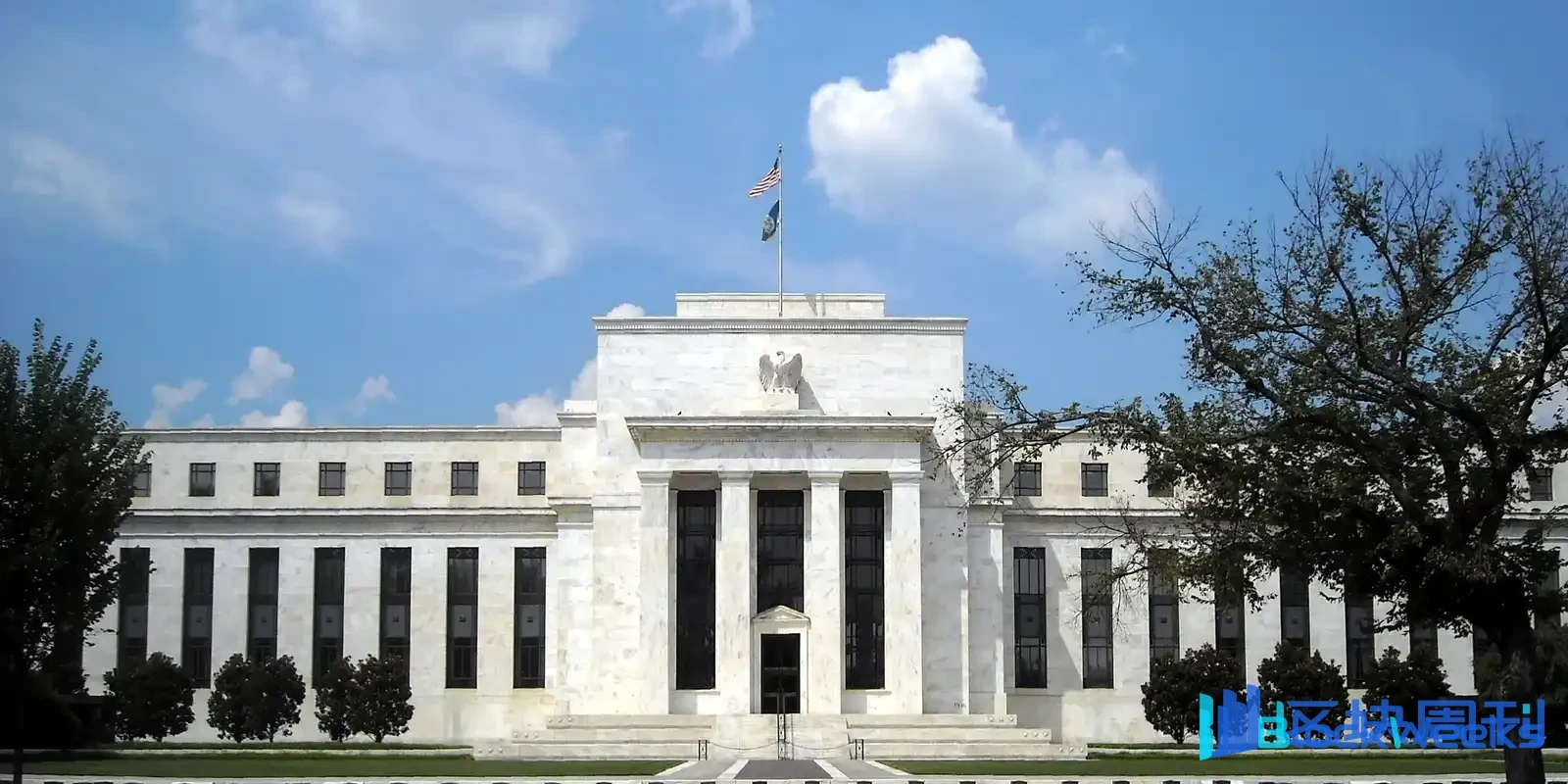
Kansas City Fed's Schmid: Inflation Too High and Moving in the Wrong Direction — the Fed Still Has Work to Do
Kansas City Fed President Schmid said inflation is uncomfortably high, with September prices up 3.6% year over year — well above the 2% target and heading the wrong way — meaning the Fed still has work to do. He pushed back on narratives that inflation stems from supply shocks or is immune to monetary policy, stressing that the Fed has both the tools and the responsibility to address it. Boston Fed President Collins also backed gradual rate hikes. Markets have fully priced in a 25-basis-point December hike, with a small chance of a 50-basis-point move. The article also cites energy, tariffs, AI infrastructure, and health care costs as sources of inflationary pressure.
1 hour ago
BTC Breaks Below 200-Week Moving Average as Fear Index Hits 10 — Has It Finally Bottomed?
Drawing on Michael Saylor's recommended Strategy Bitcoin dashboard, this article examines four key indicators: BTC at $64,947 has fallen below its 200-week moving average of $67,906, a level it has historically traded beneath only 5.6% of the time; spot ETFs saw $2.919 billion in cumulative net outflows over the past 30 days; the Fear & Greed Index has dropped to 10, deep in extreme fear territory; and Bitcoin dominance has climbed against the trend to 66.9%, signaling capital rotating out of altcoins and into BTC. The article argues these indicators point to a market trading in a low-valuation zone on a long-cycle basis.
BTCMichael Saylor200-week moving averageETF Outflows1 hour ago
Crypto Payments in Hong Kong: Which Licenses Do You Actually Need?
This article breaks down the licenses required to run a crypto payment business in Hong Kong, arguing that the right license depends on what your business actually does—not what your product is called. Fiat exchange and cross-border transfers point to an MSO license; holding merchant balances and continuing to make payments triggers SVF; proprietary virtual asset trading, custody, or stablecoin issuance each require VATP, VA Dealing, VA Custody, or a stablecoin issuer license respectively. It also covers money lender licenses, TCSP, and upcoming regulatory transition arrangements, advising firms to first map out fund flows, asset control, and customer relationships before matching each activity to its licensing scope.
1 hour ago
Solana Exits Six-Year Beta, Launches 1.0 Mainnet With 150ms Transaction Finality
The Solana Foundation, alongside Anza and Firedancer, has officially dropped the Mainnet Beta label in place since 2020, upgrading to Solana 1.0 with a unified protocol versioning standard. The change reflects network maturity and governance updates rather than any underlying migration, leaving SOL assets and on-chain data unaffected. Meanwhile, the Alpenglow consensus mechanism has gone live on mainnet, cutting transaction finality to roughly 150 milliseconds, while the Firedancer client is being rolled out to create a dual-client setup that reduces single points of failure.
 SOLFiredancer clientAlpenglow consensusSolana 1.0
1 hour ago
Venture Capital's Growing Funds, Shrinking Returns: The VC Crisis Behind the AI Boom
Veteran investor Jerry Neumann examines how top VC firms like Benchmark and USV have dramatically expanded their fund sizes, arguing that the surge in capital per partner has overwhelmed partners' bandwidth, forcing firms to abandon underwriting uncertainty in favor of growth equity or leveraged buyouts. Drawing on Knight's risk-versus-uncertainty theory and comparing today's situation to the 1980s VC crisis, he warns that capital concentration amid the AI arms race is repeating history—traditional venture capital is partially dying out, while small, agile funds will carry the torch for exploring the unknown.
1 hour ago
Kava Lending Protocol HARD Lend Hit by $1.83M Exploit, Moves to Permanently Shut Down New Borrowing
HARD Lend, a lending app on Kava Chain, was exploited through a flaw in its dormant BUSD collateral market that let an attacker inflate collateral value, repeatedly borrow and liquidate, and drain roughly 53.9 million KAVA (about $1.83 million). Some 49.2 million of the tokens were bridged via LayerZero to BNB Chain and sold, with part of the funds now frozen. The Kava team has patched the vulnerability, stressed that the risk was confined to the application layer with mainnet consensus unaffected, and launched a 7-day governance proposal to permanently halt new lending on HARD Lend while winding down existing positions.
 KAVAHARD LendKavasmart contract exploit
1 hour ago

Big Short's Burry Questions Nvidia Earnings: Where Did Singapore's 22% of Revenue Go?
Michael Burry, the investor made famous by The Big Short, is raising questions about Nvidia's financial reporting. He notes that in Q3 of fiscal 2026, Nvidia quietly changed how it attributes revenue by geography—shifting from billing location to headquarters location—making Singapore-based offshore revenue that once accounted for 22% of total sales ($10.16 billion in a single quarter) effectively vanish, with prior fiscal 2024 and 2025 figures restated. Citing a Wall Street Journal investigation into Southeast Asian data centers circumventing export controls, Burry argues the change obscures where high-end GPUs actually end up, amounting to mild financial manipulation and flagging compliance and forensic review risks. Burry says he still holds put options on Nvidia.
1 hour ago

Bitcoin Wallet Maker Trezor Says Customer Data Exposed Again
Hardware wallet maker Trezor disclosed that its logistics partner Skladon was hacked on November 7, potentially exposing the names, phone numbers, addresses, and purchase details of roughly 27,000 orders. Trezor says its own systems were not breached and that wallet backups, PINs, and recovery seeds remain safe. This marks the third third-party vendor security incident in three months, following breaches at ShipMonk and Brevo that affected about 80,000 people and 347,000 email addresses respectively. Customers have already reported scam calls, with attackers likely using order data for targeted phishing.
BTCTrezor1 hour ago

Bitcoin's $2 Billion Liquidation Weekend Has Traders Eyeing $60,000
Bitcoin fell to about $62,100 on Sunday, its lowest since July, as roughly $2 billion in crypto derivatives positions were liquidated within 24 hours—around $1.8 billion of them longs. U.S. spot Bitcoin ETFs saw a seventh straight day of net outflows totaling about $1.91 billion, with BlackRock's IBIT and Fidelity's FBTC hit notably. Deribit data shows over $800 million in open interest on $60,000 put options. RSI near 24 signals oversold conditions, but doubts remain about whether any rebound can last.
BTCBitcoin liquidationoptions marketput contracts1 hour ago

Hackers Hijacked Bitcoin Miner Rewards in AI-Powered Attack, Luxor CEO Says
Luxor CEO Nick Hansen revealed that hackers exploited the company's Commander mining management software in a "sophisticated AI-powered attack vector," briefly seizing control of hashrate across more than a dozen customer accounts and redirecting miners to other pools to steal mining rewards. Luxor patched the vulnerability within two hours, said no data was breached, and will fully compensate affected customers for the redirected hashrate. Hansen warned that crypto firms face relentless probing by AI models stripped of safety guardrails, urging peers to harden their infrastructure.
BTCvulnerability patchhashrate redirectBitcoin mining1 hour ago