


After the Democratic Party won both chambers of the U.S. Congress, the first thing to change was not any particular piece of legislation, but the way the market views the relationship between business and politics.
Musk was asked to preserve records related to Starlink and Starshield, and the Trump family's crypto business entered the investigation list of the next Congress. After Jensen Huang resigned as CEO of Nvidia, the company became entangled in congressional inquiries, board investigations, and shareholder lawsuits.
The causes of these events differ and cannot all be attributed to the Democratic Party. But they expose the same problem: over the past two years, being close to the White House was once seen by the market as a policy advantage. After the Democratic Party won Congress, the same business-politics relationship began to become a lead for committee investigations and conflict-of-interest reviews.
The majority has not yet taken effect
In the midterm elections on November 3, 2026, the Democratic Party won majorities in both the Senate and the House of Representatives.
The new Congress will not formally take office until January 3, 2027. Before that, Republicans still control the current Congress. Democrats can now prepare investigations, demand that relevant agencies preserve documents, and pressure companies in advance; committee subpoenas with real coercive force will have to wait until after the transfer of power.
This is also the most important dividing line when assessing this round of political risk.
What has publicly emerged so far is mainly congressional oversight, board investigations, and civil litigation. They may damage corporate reputation and slow government contracts and regulatory approvals, but they do not equal criminal conviction, let alone a completed "reckoning."
Democrats likewise cannot arbitrarily rewrite the rules with their current seats. Trump still holds the presidential veto, and Democrats in both chambers have not reached the two-thirds majority needed to override a veto.
With limited legislative space, investigative power thus becomes more important.
Musk received the letter first
Musk is the earliest among Trump's business allies to enter substantive proceedings.
In November 2026, two Democratic senators formally wrote to Musk, demanding that he preserve records related to the use of Starlink and Starshield in Ukraine, including communications between SpaceX executives and the White House and the Pentagon.
SpaceX simultaneously controls commercial satellite communications, military communications technology, and a large number of U.S. government contracts. Musk himself also participated in the work of the Department of Government Efficiency as a special government employee. The identities of entrepreneur, government adviser, political donor, and federal contractor are concentrated in one person.
When Republicans controlled Congress, Democratic attempts to subpoena Musk were blocked. After the majority changed hands, this protective layer will disappear in January 2027.
House Democrats are also preparing to investigate the Department of Government Efficiency's cuts to federal employees, SpaceX's government contracts, and whether there is a conflict of interest between Musk's companies and the federal government.
For Tesla, the short-term risk may not immediately fall on car sales. What is more worth watching is subsidies, procurement, regulatory approvals, and Musk's personal attention.
For SpaceX, the problem is more direct. One of its greatest advantages is that its technological capabilities are deeply tied to the U.S. national security system. Now, this tie also gives Congress a reason to intervene in the company's operations.
The suspense of Jensen Huang's return
Jensen Huang's situation is more complicated, and the pressure he faces comes from several different lines.
The first to demand that he accept a closed-door inquiry were three Republican chairs of House committees. The Nvidia board launched a corporate governance investigation, while shareholders initiated civil securities litigation. Democratic lawmakers subsequently demanded an expanded investigation, but they were not the only driving force.
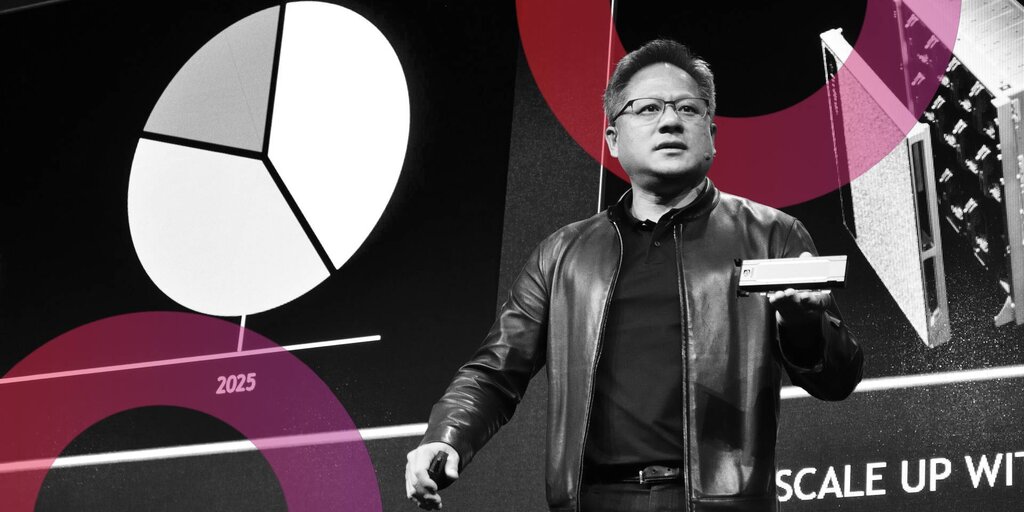
On November 12, 2026, Nvidia announced that Jensen Huang had resigned as president, chief executive officer, and director, effective immediately. Chief Financial Officer Colette Kress temporarily took over as chief executive officer; Harvey C. Jones became the first board chairman in Nvidia's history.
The announcement did not explain the specific reason for Jensen Huang's departure, and the board's independent investigation has not yet concluded.
Departure is not necessarily the end of this personnel change.
On November 15, the UK's Financial Times, citing anonymous sources familiar with the matter, reported that Jensen Huang had discussed with close associates the possibility of returning to Nvidia. Some Silicon Valley entrepreneurs, employees, and shareholders are also pushing the board to reconsider his departure. Musk publicly supported the relevant petition; two investment institutions holding Nvidia shares wrote to the board, asking it not to hastily rule out Jensen Huang's return.
However, this is still quite far from "reinstatement." The return news currently comes only from anonymous sources, and Jensen Huang himself has not publicly commented. Nvidia's public position is that the company is selecting an external headhunting agency, has not yet formally contacted any CEO candidate, and that speculation about specific candidates is premature.
The board has also not suspended the succession process. It has already separated the roles of chairman and chief executive officer and explicitly stated that it is considering both internal and external candidates. The ongoing independent investigation, congressional inquiries, and Washington's scrutiny of Nvidia's export control compliance will all affect whether Jensen Huang can return to management.
This controversy forces the market to confront a question that has rarely been seriously discussed in the past: in Nvidia's valuation in recent years, how much belongs to CUDA, the product roadmap, and the developer ecosystem, and how much belongs to Jensen Huang himself?
According to Nvidia market data, the company's stock price fell from $204.64 on October 30, 2026, to $162.85 on November 13, a decline of about 20.42% over the period; the closing market capitalization on November 13 was about $3.93 trillion.
But after the return rumors appeared, the market quickly reacted. Some over-the-counter contracts linked to Nvidia's stock price rose by more than 3% at one point. This at least shows that investors still regard Jensen Huang as an independent variable in Nvidia's valuation.
What will truly be informative next is whether the board will formally include Jensen Huang in the candidate list, and what conclusions the independent investigation will reach.
Crypto is the bigger money bag
Compared with Nvidia, the Trump family's crypto business has a more direct connection to political power.
The Democratic committees of the next Congress have already listed the Trump family's business dealings, World Liberty Financial, and related digital asset businesses as investigation directions. Democratic lawmakers are concerned about whether there is an exchange of interests among government policy, overseas funds, and family income.
According to public media disclosures, the Trump family's related crypto business has generated considerable revenue over the past year. Some transactions were also very close in time to Middle East capital and U.S. AI chip export policy. Existing information is not yet sufficient to prove a transfer of benefits, but it is enough for Congress to demand documents, witnesses, and funding records.
Regulatory expectations have also changed. The CLARITY Act, which the industry had high hopes for, failed to obtain the 60 votes needed to advance in a Senate procedural vote in September 2026. After the Democratic Party won both chambers, restarting the bill in its current version has become even more difficult.
The controversy centers on two points.
First, the potential conflict of interest arising from government officials and their families holding and operating crypto assets; second, whether stablecoin yield products will drain deposits from community banks.
This makes the revenue the Trump family obtains from crypto business no longer just political news. It will directly affect whether the U.S. crypto industry can obtain a clear regulatory framework.
What the industry originally expected was regulatory certainty; what it may now face is ethics investigations first and market structure legislation retreating.
Capital begins to look for alternatives
What really affects the market in this round of change is that capital no longer treats "being close to Trump" merely as a positive.
The previous trading logic was easy to understand: Trump supports AI infrastructure construction, so Nvidia and the computing power chain benefit; Trump loosens crypto regulation, so Bitcoin, trading platforms, and stablecoin companies benefit; Musk helps Trump campaign, so Tesla and SpaceX obtain a better political environment.
This logic omitted one cost. The closer a company's relationship with the president, the higher the investigative value once the opposition party retakes Congress. Companies can obtain contracts, policies, and regulatory convenience, but they will also more easily be asked to explain how these benefits came about.
Capital has already shown signs of diversion. In the first trading phase after Jensen Huang's resignation, some funds flowed to AMD, Broadcom, and the concept of cloud providers' self-developed chips. What the market is trading is not "the disappearance of AI," but reducing dependence on a single company, Nvidia.
The same is true for the crypto market. Bitcoin and related stocks were simultaneously suppressed by rising U.S. Treasury yields, blocked regulatory bills, and expectations of political investigations, and cannot be attributed solely to the Democratic victory. But the policy imagination that once supported valuations has indeed weakened.
For traditional financial institutions, this is instead an opportunity.
If stablecoin interest payments are restricted, the pressure of deposit outflows from banks will ease; if crypto platforms face stricter conflict-of-interest scrutiny, financial institutions with licenses, customer identification systems, and mature compliance departments will regain their advantage.
Value has not left the financial system; it is merely shifting from participants with stronger political connections to participants better able to withstand compliance scrutiny.
The protective layer begins to be priced in
After the Democrats retook the House in 2018, they could not easily overturn Trump's policies, so they turned committee investigations and subpoenas into their main tool of checks and balances.
The difference this time is that a larger business coalition has already formed around Trump.
Musk owns rockets, satellites, cars, an artificial intelligence platform, and social media; the Trump family is directly involved in crypto assets; Nvidia is both the core of AI computing power and at the center of chip export controls to China. Commercial interests, national security, and political donations are already entangled.
It is difficult for the Democrats to dismantle this system all at once through legislation, but they can keep the relevant companies submitting documents, appearing at hearings, and explaining government contracts and regulatory decisions.
This will increase legal fees and management burdens, and may also delay approvals, procurement, and cooperation. More troublesome still, investigations will constantly remind investors that the policy dividends previously factored into valuations may not be able to cross election cycles.
What the next round of the market really needs to price is not whether some billionaire will receive a subpoena.
Rather, it is how much the layer of political protection that Nvidia, Tesla, SpaceX, and crypto companies have relied on in the past is actually worth when the White House remains in Trump's hands but Congress turns to the Democrats.
*The content of this article is for reference only and does not constitute any investment advice. Markets carry risks, and investment requires caution.