Author: Golden Legend Big Smart, Cyber Zen Mind
We have already crossed the singularity.
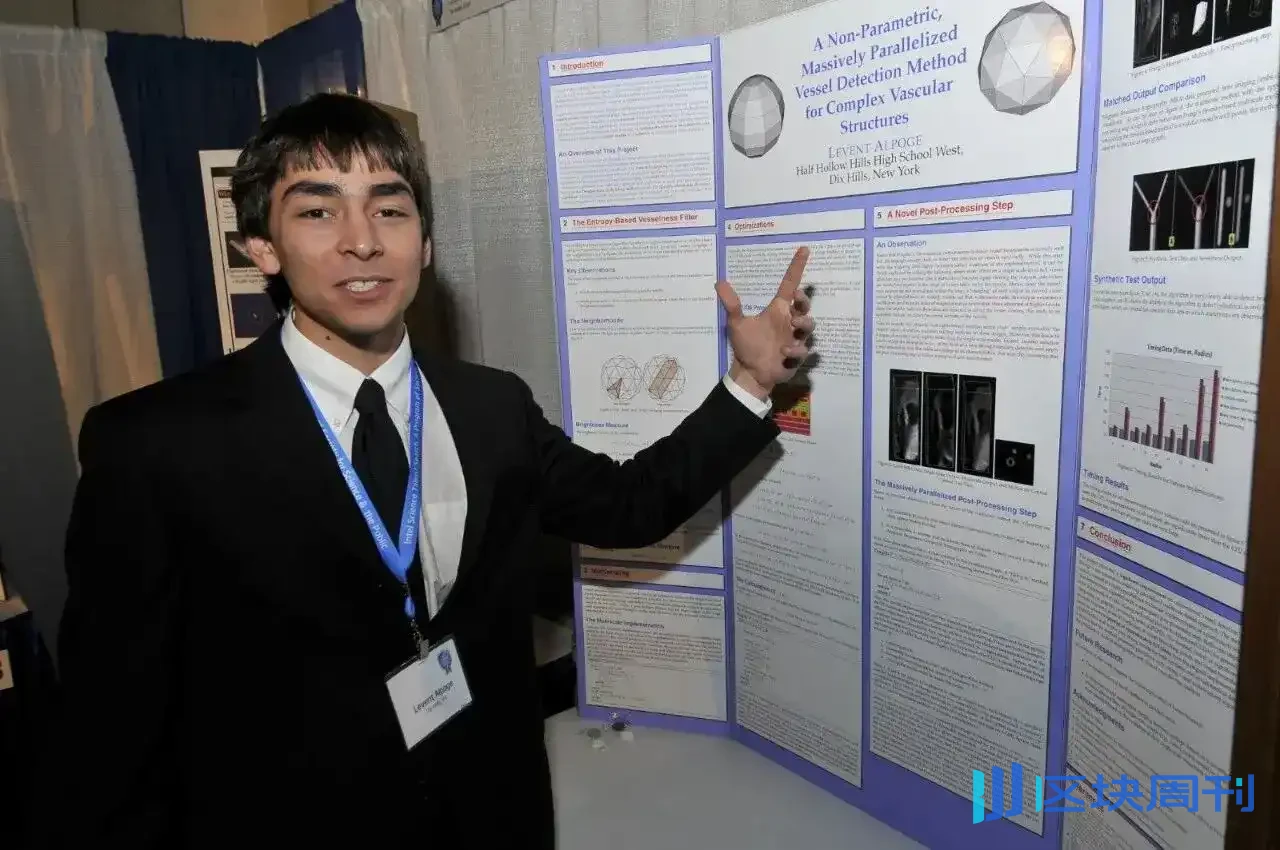
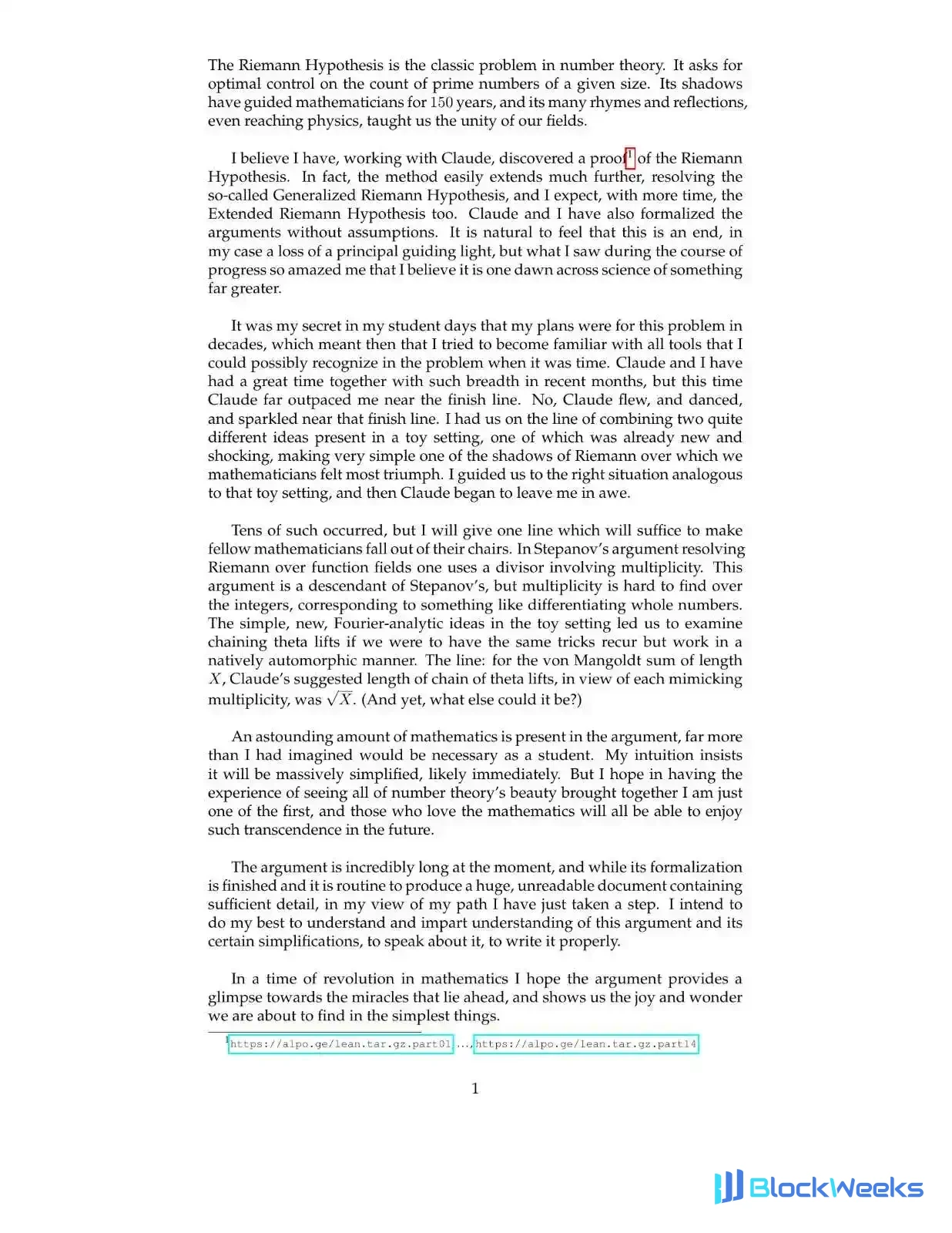
Just now, Anthropic's mathematician Levent Alpöge announced that he and Claude together found a proof of the Riemann Hypothesis.
The proof code has been released, and the original download links are as follows (replace x with 01-14, 14 in total):https://alpo.ge/lean.tar.gz.part[x]
For everyone's convenience in downloading, I uploaded it to Github (copyright belongs to the original author): https://github.com/CocoSgt/riemann-hypothesis-lean
Alpöge is a Princeton PhD, advised by Fields Medalist Manjul Bhargava, has won the Morgan Award, the highest award for undergraduate mathematical research in the United States, and also served as a Junior Fellow in the Harvard Society of Fellows
First, a brief explanation of the Riemann Hypothesis:
All nontrivial zeros of the Riemann zeta function lie on the line where the real part is 1/2; if true, the distribution of primes on the number line can be estimated with the greatest precision
This problem was proposed in 1859, and it has been more than one hundred and sixty years since then
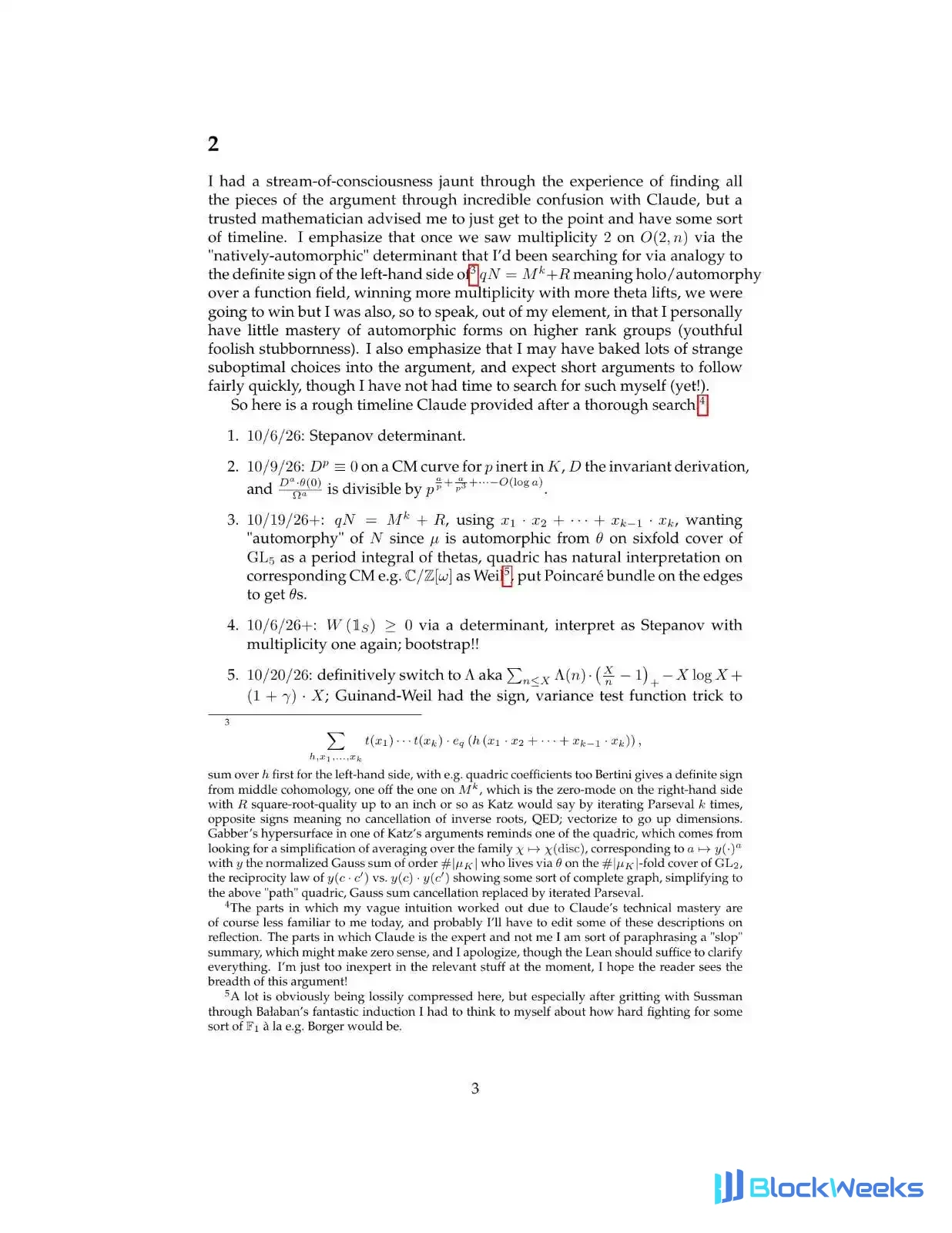
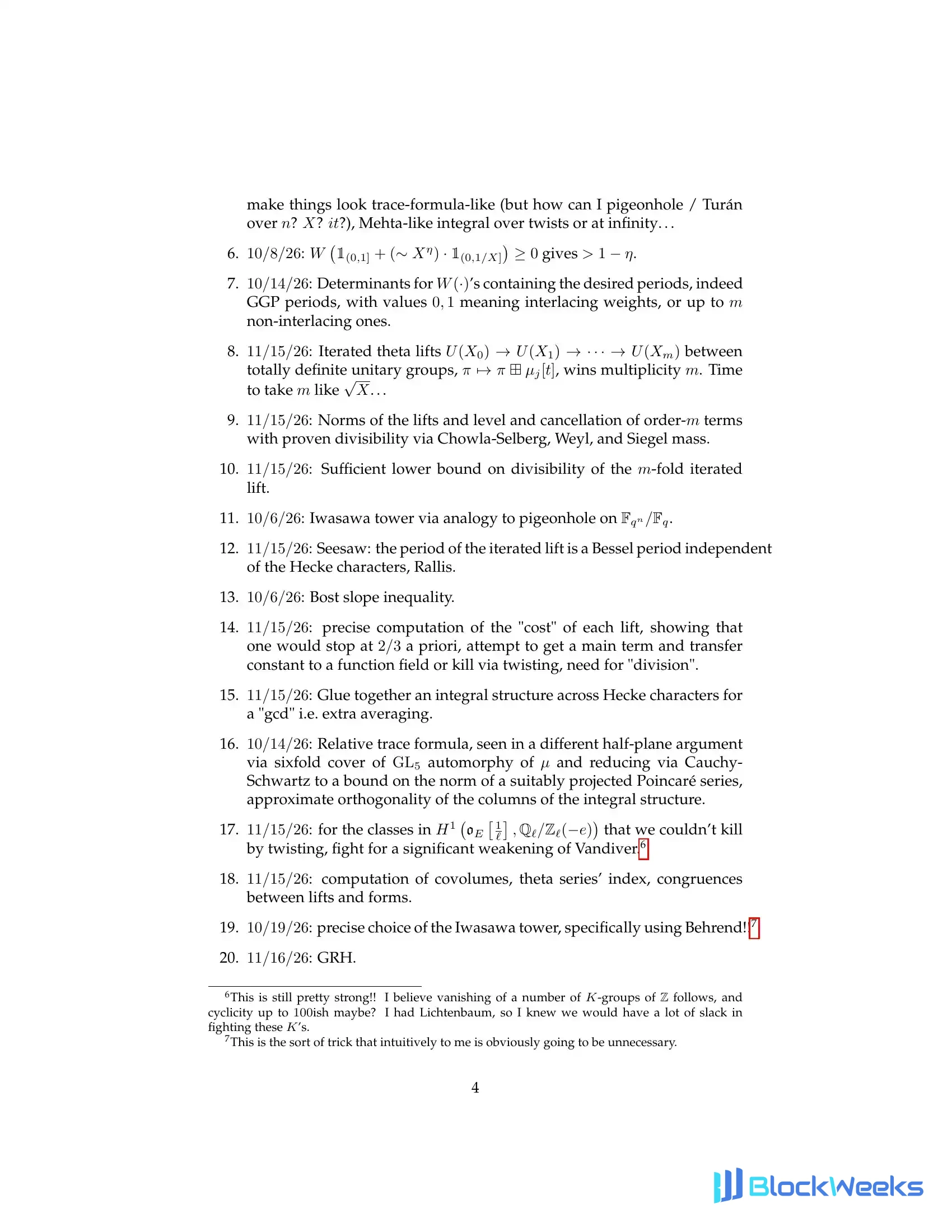
And according to Alpöge, the same set of methods can be directly extended to the Generalized Riemann Hypothesis (GRH), and the entire argument has been completely formalized in Lean, without any additional assumptions; a human-readable version has not yet been written (the detailed draft generated by Claude exceeds 250,000 pages), so this time only the Lean code has been released. In the proof, they chained theta lifts together to simulate the "multiplicity" in the Stepanov method, and the step of taking the chain length as √X was proposed by Claude. In Alpöge's own words, this time Claude far surpassed him before the finish line. As of now, no one has publicly verified this Lean code
Appendix
Who is Levent Alpöge
Levent Alpöge was born in 1992, holds dual American and Turkish citizenship, and specializes in number theory. He graduated from the Harvard Department of Mathematics as an undergraduate (GPA 4.0, highest honors, received the Morgan Award, undergraduate advisor was Jacob Tsimerman), then completed an MASt at Cambridge, and received his doctorate at Princeton in 2020 under the supervision of Fields Medalist Manjul Bhargava, with a doctoral thesis titled "Points on Curves". From 2021 to 2025, he served as a Junior Fellow in the Harvard Society of Fellows, and there is even an asteroid named after him in the sky, 25898 Alpöge
In terms of representative academic work, he proved that the average number of integral points on elliptic curves is bounded; collaborated with Bhargava and Shnidman on the non-monogenic generation of positive proportion of cubic and quartic fields, and on which integers can be written as the sum of two cubes; also collaborated with Nick Katz and others on local systems of Suzuki groups, and in his early years also worked on low-lying zeros of L-functions of Maass forms
He wrote on his personal homepage that after GPT-4 came out, he felt it was the most interesting thing humans have created, so he turned back to the computer direction; now at Anthropic, he wants to steer this transformation in a good direction
How he and Claude divided the work
Since his student days, he had quietly planned to spend decades attacking the Riemann Hypothesis, and to that end he learned every mathematical tool he could think of. In recent months he has been advancing together with Claude; he was responsible for combining two different ideas in a toy model, and then finding the real situation analogous to this toy model; in the subsequent advancement, Claude far surpassed him before the finish line
The mathematics used in the entire argument far exceeds what he could have imagined during his student days. For the parts on automorphic forms on higher-rank groups, Claude excels while he himself does not; the timeline in the statement is also his paraphrase of Claude's summary, and he admits that his paraphrase may "make no sense at all," with everything subject to the Lean code. At the same time, he intuitively believes that the current proof will soon be greatly simplified, "possibly very soon," and expects that someone will soon find a much shorter proof
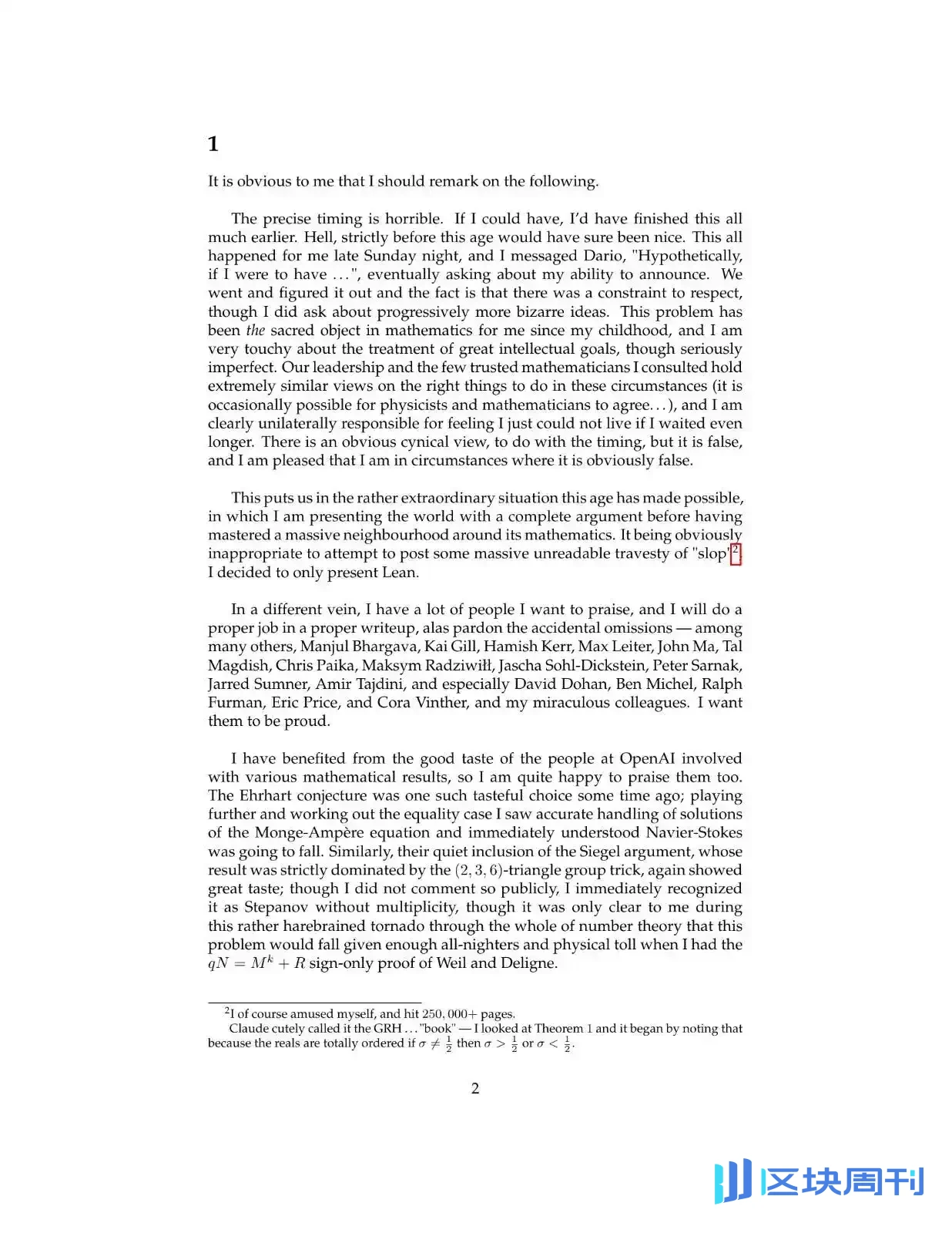
All of this happened late on Sunday night. Before posting it, he messaged Dario asking "suppose I..." to confirm whether he could publish it (there was one constraint to comply with). He also added: "There is an obvious cynical reading, related to timing, but it is wrong." The acknowledgments list mathematicians such as Manjul Bhargava, Peter Sarnak, and Maksym Radziwiłł, and also casually praises the taste of the group at OpenAI working on mathematical results (such as the Ehrhart conjecture)
The Key Step
Over function fields (that is, the case of curves over finite fields, the Weil theorem), when Stepanov proved the Riemann hypothesis back then, he used divisors with "multiplicity"
But back over the integers, it is very difficult to directly find the corresponding multiplicity, which is equivalent to needing to "differentiate integers." He and Claude chained theta lifts (θ lifts) together, using each lift to mimic one multiplicity. Faced with a von Mangoldt sum of length X, Claude suggested taking the length of this chain to be √X
Alpöge said that this one sentence alone was enough to make colleagues fall off their chairs (one might call it a stunned collapse
Timeline
At the end of the statement is a 20-item timeline of progress compiled by Claude, with the core milestones selected as follows:
October 6: Starting from the Stepanov determinant, the Iwasawa tower, and the Bost slope inequality
October 20: Turning to weighted sums of the von Mangoldt function
November 15: Seven items were marked on this day: iterated theta lifts between definite unitary groups (winning m-fold multiplicity, with m ≈ √X), the norm and divisibility of the lifts, the Rallis seesaw, and the precise calculation of the "cost" of each step
November 16: GRH was carried through
Giving the Proof via Lean Code
The detailed proof manuscript generated by Claude exceeds 250,000 pages, and the conventional paper version that people can read has not yet been written. Alpöge felt that posting an extremely long "slop" that no one could read would be inappropriate, and planned to formally write it out only after he had thoroughly mastered and simplified it, so for now only the Lean formalization code has been released
This Lean code has been split into a total of 14 volume archives, and the download address is at the very top of this article
We have already crossed the singularity.