News Center


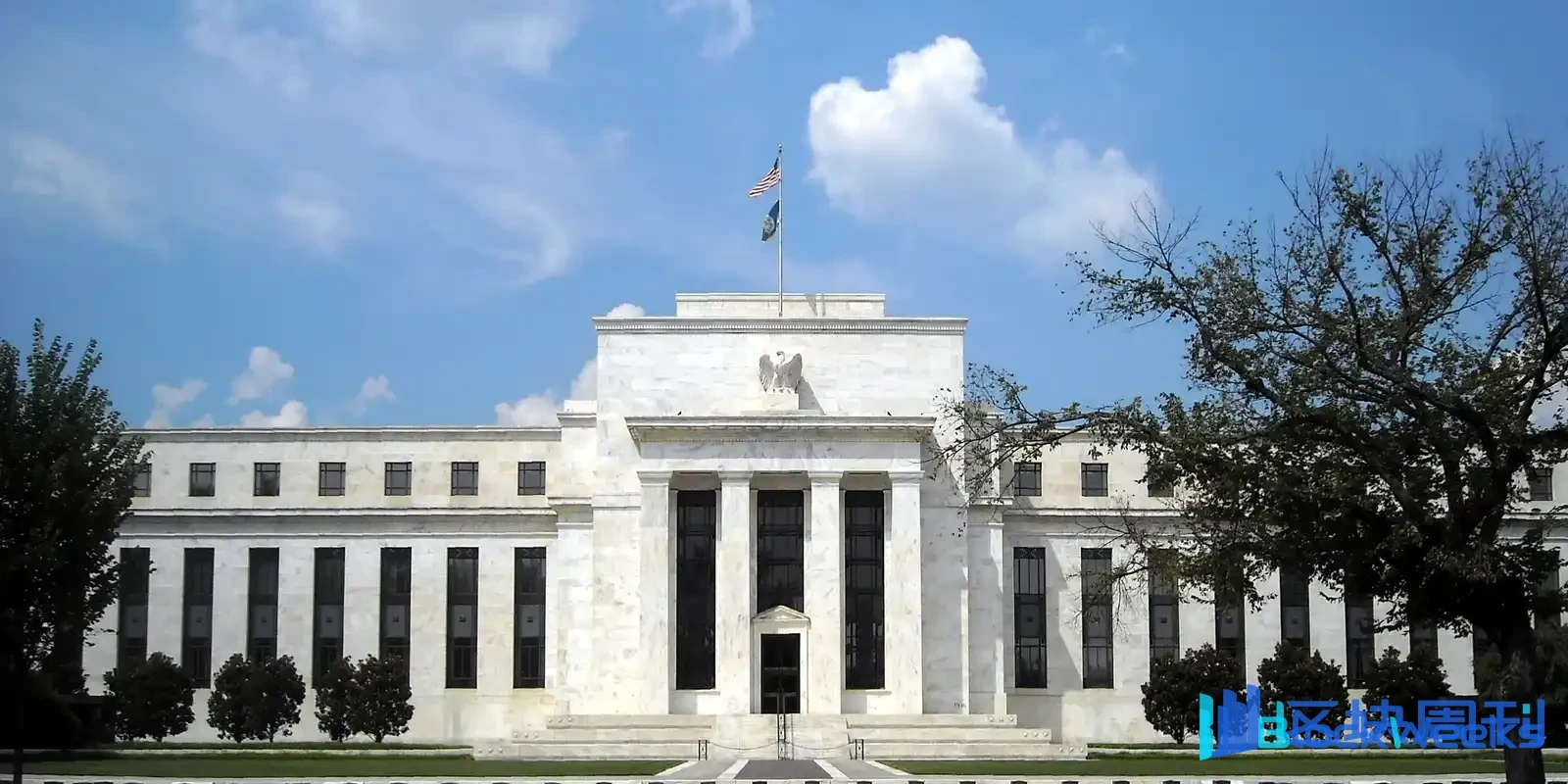


Systemic Risk Breaks Through Multiple Support Levels; BTC and HYPE Stay Flat for Now | Guest Analysis
 BTCHYPE price analysisBTC technical analysis52-week moving average






Tether Invests $15M in Nomad to Expand Dollar Access in Brazil
Tether Capital has announced a $15 million investment in Brazilian fintech Nomad to broaden access to dollar-based financial services and explore integrating USDT and Tether Gold (XAUT). Nomad serves over 3.8 million customers and manages 7 billion reais in assets. The partnership spans international payments, savings, and investments, though no timeline has been set for tokenized products. The move comes as Brazil tightens eFX rules, restricting crypto settlements between payment institutions and overseas counterparties.
 USDTInvestmentregulationPayments
4 hours ago

Hong Kong's Crypto Bill Is Coming by Year-End. Here's What Will Change
Hong Kong Financial Secretary Paul Chan confirmed at Bloomberg's Global Regulatory Forum that the government will submit a bill by the end of 2026 to bring crypto dealers, advisers, asset managers, and custodians under a licensing regime through amendments to the Anti-Money Laundering and Counter-Terrorist Financing Ordinance. Hong Kong has already established licensing regimes for virtual asset trading platforms and stablecoin issuers—only two of 36 stablecoin applicants were approved in April, and a Hong Kong dollar stablecoin has been issued. Publicly offered tokenized funds have grown roughly sevenfold over the past year, with two money market funds launching 24-hour trading in October.
 USDCStablecoin Regulationregulatory perimetercrypto licensing
11 hours ago
Brazil Takes Aim at Stablecoins With Shocking Money Laundering Claim
Gerson Romantini, head of the foreign exchange department at Brazil's central bank, sparked controversy at a private event by claiming that even legally obtained funds could be considered money laundering once used to buy stablecoins. The article notes this was not an official statement, but Brazil has already tightened restrictions on using virtual assets for international payment settlements through Resolution No. 561, particularly targeting 'stablecoin sandwich' operations. The Brazilian Association of Tokenization and Digital Assets (ABToken) has pushed back, arguing that stablecoin use is not inherently illegal and warning that a blanket ban could have negative consequences.
USDTStablecoin Regulationmoney launderingCrypto Payments19 hours ago

Brazil Central Bank Official Warns Stablecoin Transfers May Constitute Money Laundering
Gerson Romantini, head of the Brazilian central bank's foreign exchange department, warned at a closed-door industry meeting that certain stablecoin transfers may constitute money laundering even when the original source of funds is legitimate. Regulators have identified two "stablecoin sandwich" schemes in which reais are received, converted into dollar- or euro-denominated stablecoins, moved across borders, and converted back into local currency to settle foreign exchange transactions. Brazil's existing FX rules already restrict stablecoin settlement, and a November 19 meeting may further curb fintech firms' FX services. Crypto companies already face stricter licensing and capital requirements, prompting some to exit the Brazilian market.
19 hours ago
Should Government Officials Be Barred From Prediction Markets? House Oversight Says Maybe
House Oversight Committee Chairman James Comer has circulated a staff memo recommending that Congress consider new restrictions on federal employees, military personnel, and security clearance holders trading in prediction markets, following an investigation into insider trading. Proposals range from a full ban to narrower limits on government-related contracts. The memo cites the Commodity Exchange Act and the STOCK Act, and acknowledges self-regulatory efforts by platforms such as Polymarket and Kalshi. The piece is primarily a political and regulatory story and does not substantively address specific crypto assets.
2026-11-13

Prediction Markets: Comer Calls for Trading Ban on US Officials
House Oversight Committee Chairman James Comer, after reviewing roughly 1,700 pages of documents, is urging new restrictions or even a full ban on government officials trading on prediction markets. The probe focuses on insider-trading risks among officials, military personnel, and security-clearance holders, and recommends Congress consider legislation covering all three branches while pushing prediction-market firms to share information with federal agencies to enforce limits. Kalshi and Polymarket say they have tightened insider-trading controls, and the Senate has already barred its members and staff from trading on prediction markets.
2026-11-13

Crypto Laundering Poses 'Material Risk' to UK Ahead of FATF Review: RUSI
A task force convened by UK think tank RUSI warns that crypto poses a "material risk" to the UK. FATF assessors arrive in June 2027, but the UK's comprehensive crypto regulatory regime won't take effect until October 2027, leaving Britain to prove it can combat crypto money laundering. The report notes that City of London police believe 66% of investment fraud involves crypto, and the 2025 national risk assessment ranked crypto laundering as high-risk. The task force also says over-the-counter brokers may launder hundreds of millions of dollars annually, and considers UK regulation more conservative than Hong Kong, the EU and Singapore.
2026-11-13

Top 5 Prediction Market Platforms to Watch in 2026
This article rounds up five prediction market platforms worth watching in 2026: Kalshi, Polymarket, Probly, Limitless, and Manifold. Kalshi is a CFTC-regulated designated contract market that trades event contracts through a traditional exchange model, while Polymarket runs on the Polygon blockchain and uses USDC as collateral for on-chain event trading. The article compares how these platforms differ in trade processing, contract settlement, fund custody, and outcome determination, and notes that prediction markets have expanded beyond election forecasting into real-world events such as crypto prices, sports, and economic data.
USDCprediction marketsPolymarketPolygon2026-11-13

Western Europe's Crypto Economy Reaches $2.08 Trillion as Stablecoin Adoption Soars
A Chainalysis report shows Western Europe's crypto economy hit $2.08 trillion in annual activity from July 2025 to June 2026, up 1.2% year-over-year and ranking as the world's second-largest regional market. Stablecoin holdings in personal wallets surged 131% across the region, far outpacing the global 52% growth, with market share rising from 3.4% to 5.1%. The UK remains the largest market at $424.5 billion despite an 8% overall decline driven by lower decentralized exchange trading. Germany, France, the Netherlands, Spain, and Switzerland follow. The report also notes that European banks and institutions are accelerating compliant stablecoin offerings under the MiCA framework, with the European Banking Authority designating Circle's USDC as the first significant e-money token.
USDCRegional Crypto EconomyWestern EuropeChainalysis2026-11-13

Trump Names Four SEC and CFTC Nominees as US Crypto Regulation Debate Heats Up
President Trump has nominated four candidates for the SEC and CFTC—two Democrats and two Republicans. Kristin Johnson and Steven Levine are tapped for the SEC, while Nathan Anonick and Matthew Rowland are up for the CFTC. With Democrats set to control both chambers of Congress in January following the midterms, the CLARITY Act remains stalled after failing a Senate procedural vote. All nominations require Senate confirmation, and lawmakers continue to spar over crypto regulation and the president's financial conflicts.
2026-11-13